
Meet entrepreneurs turning lived experience, local knowledge and bold ideas into meaningful change.
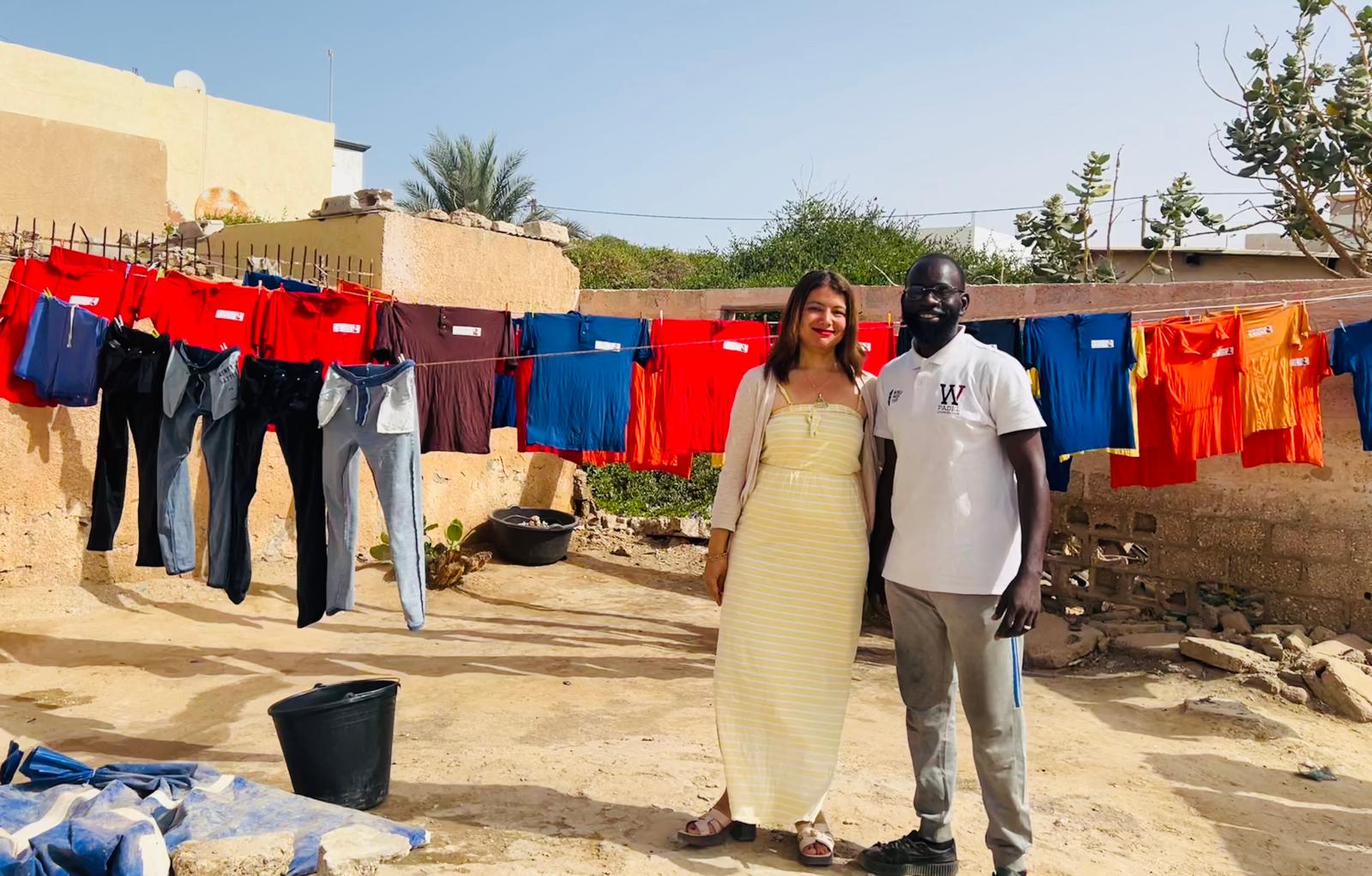
Abo-Bakar
Green Laundry
Building a greener laundry service adapted to local water and energy constraints.
Read Abo-Bakar Camara’s story
“Building a business here means constantly adapting and finding solutions. When the electricity cuts or the water stops, you still have customers waiting.”
— Abo-Bakar
The challenge: laundry is not just laundry
In Nouakchott, washing clothes can take significant time and physical effort. Not every household has access to a washing machine, and the burden of laundry — like much unpaid domestic work — falls largely on women.
For women managing large households, laundry may mean hours of washing by hand, on top of securing water, caring for family members and managing other responsibilities.
Abo-Bakar looked at this very ordinary task and saw two things at once: a problem worth solving and a business opportunity.
What if a laundry service could give women and families some of that time back — while using water, energy and cleaning products more responsibly?
That question became the starting point for Green Laundry.
But building a green laundry in Nouakchott comes with challenges. A laundry depends on water and electricity — and neither can be taken for granted. Power cuts stop the machines and delay customers’ orders. Water interruptions can halt operations altogether. Equipment is expensive, energy costs put pressure on already narrow margins, and access to finance remains difficult for a young entrepreneur trying to grow.
For Green Laundry, sustainability therefore means more than choosing an environmentally friendly detergent. It means finding a business model that is responsible, affordable and able to survive the realities of the market in which it operates.
The solution: making an everyday service greener and more social
Abo-Bakar started Green Laundry with one washing machine and a small team.
His ambition is to make professional laundry services more accessible while reducing the burden of domestic laundry, creating employment and gradually improving the environmental footprint of the business.
As Green Laundry grows, Abo-Bakar wants to train and employ young people, giving them practical skills and an entry point into work.
The market is beginning to respond. Green Laundry is attracting new individual customers and has secured its first business clients — an important step toward developing recurring business customers alongside households.
For him, that matters because social impact only lasts if the business itself works.
From a green idea to a stronger social business
MENA-can’s role has not been to teach Abo-Bakar how to become an entrepreneur. He already took that first step himself.
Our role is to help him make the next ones. Together, we have been strengthening Green Laundry’s business model, tracking weekly revenues and customer growth, understanding costs, developing recurring and B2B customers, and improving the processes behind the business.
We are also supporting Abo-Bakar to gradually digitalise administration and customer outreach — reducing time spent on manual tasks and giving him better information to make business decisions.
Now we are going further. We are exploring whether solar energy could reduce operating costs and dependence on an unreliable electricity supply; how responsible procurement can bring more local and women-led suppliers into Green Laundry’s value chain; and how the business can begin measuring the social and environmental value it creates — from jobs and skills developed to resource efficiency and, eventually, the time the service gives back to women and families.
The ambition is not simply to grow a laundry. It is to show that even an everyday service can be redesigned as a social enterprise — creating income and jobs, giving women back valuable time, supporting local producers and reducing its environmental footprint.
For Abo-Bakar, green is not a colour in the company name. It is the business model he is trying to build.
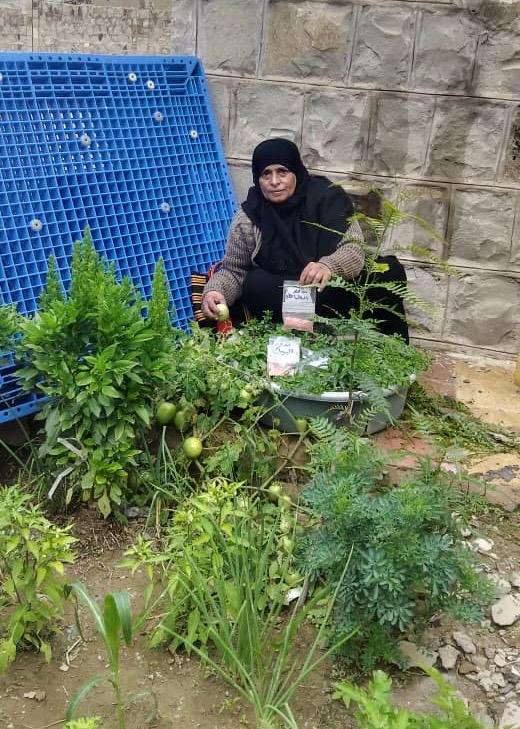
Samia
Baladi La Baladi
Developing locally rooted agricultural solutions and products grown close to her community.
Read Samia’s story
Impact Sector: Food Security · Women’s Economic Empowerment · Climate-Resilient Agriculture
The challenge: fertile land, but not enough nutritious food
For Samia, the idea behind Baladi La Baladi did not begin with a business plan. It began at home from a personal story.
When her pregnant daughter suffered from severe malnutrition, Samia started paying closer attention to what families around her were eating — and what they were able to grow.
In her rural community near Sana’a, agricultural land was all around them. Yet many families struggled to access fresh vegetables and nutritious food. Years of conflict and economic hardship have made food increasingly expensive, while family incomes have been squeezed.
Women carried much of that burden. They were often responsible for feeding their families, while having limited income of their own and little control over productive resources.
What if families could use the land already around their homes to grow some of the food they needed themselves?
The solution: starting with what people already have
Samia did not wait for funding.
She used her own savings to buy vegetable seeds and began distributing them free of charge to women in her community.
The proposition was simple: take a small piece of land beside your home and start growing your own food.
But Samia quickly understood that seeds alone were not enough. She helped women learn how to plant and care for the crops, connected them with agricultural expertise, and encouraged families to return to local and indigenous varieties suited to their environment.
Small household plots began producing vegetables for family consumption. When there was a surplus, women could sell what remained and generate income of their own.
What began as a response to malnutrition was becoming a model connecting food security, women’s economic participation and more sustainable use of local land.
Samia called her social project Baladi La Baladi — “From My Country to My Country.” The name captures the philosophy behind the enterprise: produce locally, value what already exists locally, and allow resources to circulate within the community.
From household gardens to a social enterprise
Today, Baladi La Baladi has reached approximately 1,500 families, many of them women-led households.
The project has expanded beyond distributing vegetable seeds. Samia promotes organic and indigenous crops and encourages families and farmers to think differently about what their land can produce — including food crops and longer-term agricultural opportunities such as grapes, coffee and almonds.
In a country where water is scarce and agricultural systems are under enormous pressure, Samia’s ambition is not simply to produce more. It is to encourage forms of agriculture that make better use of local resources, protect indigenous varieties and strengthen communities’ ability to feed themselves.
And women are central to that model — not simply as recipients of seeds, but increasingly as growers, producers and income earners.
From a community initiative to a stronger social business
When Samia came to MENA-can, she had already demonstrated something essential: the solution worked in her community.
Our role has been to help her think about what comes next. Together, we have been working on Baladi La Baladi’s business model, financial planning and management, and on one of the hardest questions for many social enterprises:
What should remain community support, and what can generate income to sustain the mission?
Giving seeds away can help a family today. But building a viable local seed and agricultural enterprise can help ensure that Samia does not have to depend indefinitely on grants or her own savings to reach the next family.
That means thinking more carefully about revenue, customers, local production, partnerships and how women themselves can become part of the enterprise’s value chain.
The next step is not simply to distribute more seeds or reach a bigger number. It is to build a model where women can grow food, earn income and increasingly become growers, producers and suppliers within the business itself.
Samia’s story began with one mother trying to nourish her daughter. It is now growing into something much bigger: a way of helping families see that solutions do not always have to come from outside.
Sometimes food security begins by looking differently at what is already in the ground, in the community and in people’s hands.
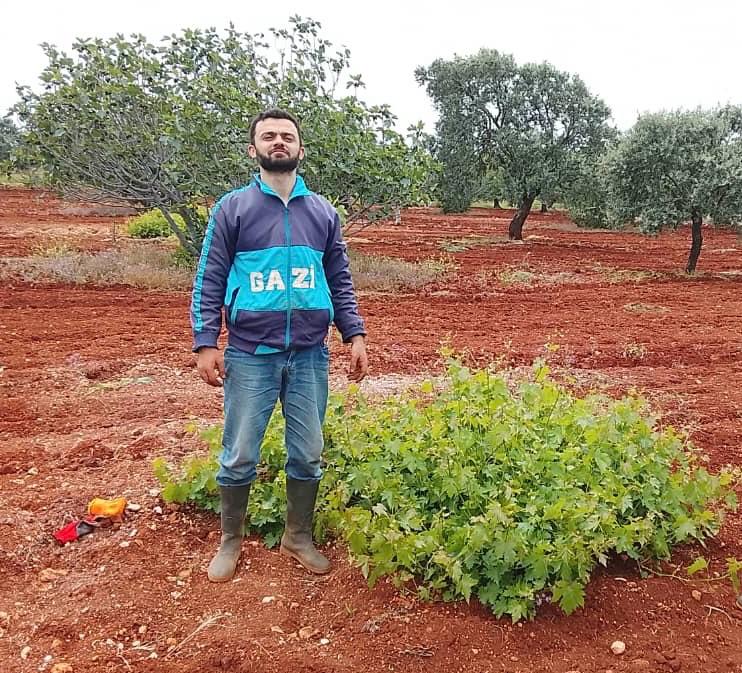
Abdelrazaq
Beit Al Mona
Transforming locally grown produce into practical food products that create value close to home.
Read Abdelrazaq’s story
Impact Sector: Sustainable Agriculture · Food Security · Rural Livelihoods · Food-Waste Reduction
The challenge: when a good harvest can still become a loss
For a farmer, producing a good harvest should be good news. But in northern Syria, growing the food is only part of the challenge.
Years of conflict have disrupted supply chains, damaged infrastructure and made transportation, energy and agricultural inputs more expensive. Cold storage and adequate post-harvest facilities remain limited.
Fresh produce does not wait.
Tomatoes, fruits and vegetables need to reach buyers quickly. When they do not, prices can fall and part of the harvest can lose its value or simply go to waste.
For a small farmer, that can mean losing income after months of work.
Abdelrazaq saw a business opportunity in that gap.
What if more of that harvest could be preserved locally, transformed into products with a longer life, and sold throughout the year?
The solution: an old tradition with a new business model
Abdelrazaq founded Beit Al Mona — “House of Provisions.”
The name comes from المونة — mouneh, the rooted regional tradition of transforming seasonal abundance into food that can be stored for the months ahead.
Beit Al Mona applies that principle as a business. Abdelrazaq purchases produce from local farmers and transforms it into tomato paste, fruit syrups and traditional preserves, extending the life of the harvest and creating products that can be sold beyond the agricultural season.
Farmers gain another market for their produce. Food that might otherwise be lost gains a longer life. Local processing creates jobs. And more of the economic value generated by agriculture can remain within the community.
The bottleneck: moving beyond manual production
Today, much of Beit Al Mona’s production remains small-scale and manual.
That limits how much Abdelrazaq can buy from farmers, process during the short harvest season and ultimately bring to market.
He knows what could change that: better food-processing equipment.
But purchasing machinery requires capital that is difficult for a small Syrian enterprise to access. For Abdelrazaq, access to finance is therefore not an abstract business challenge. It determines whether Beit Al Mona can move from manually producing small quantities to processing at a scale that makes the enterprise more competitive and increases its impact.
There is another commercial challenge. Locally produced, higher-quality food must compete with cheaper, industrially processed alternatives, making efficiency, pricing, branding and communicating the value of local production especially important.
From a good product to a business ready for investment
Our work with Abdelrazaq at MENA-can has focused on this next stage.
If someone invests in that machinery, can he demonstrate what it will change?
Not only how much the machine costs, but how much additional produce he could process, how much more he could buy from farmers, what it could do to his costs and margins, and how the investment could translate into business growth and local economic value.
The objective is not simply to help Abdelrazaq find money for a machine.
It is to help him build the case for why that investment makes business sense.
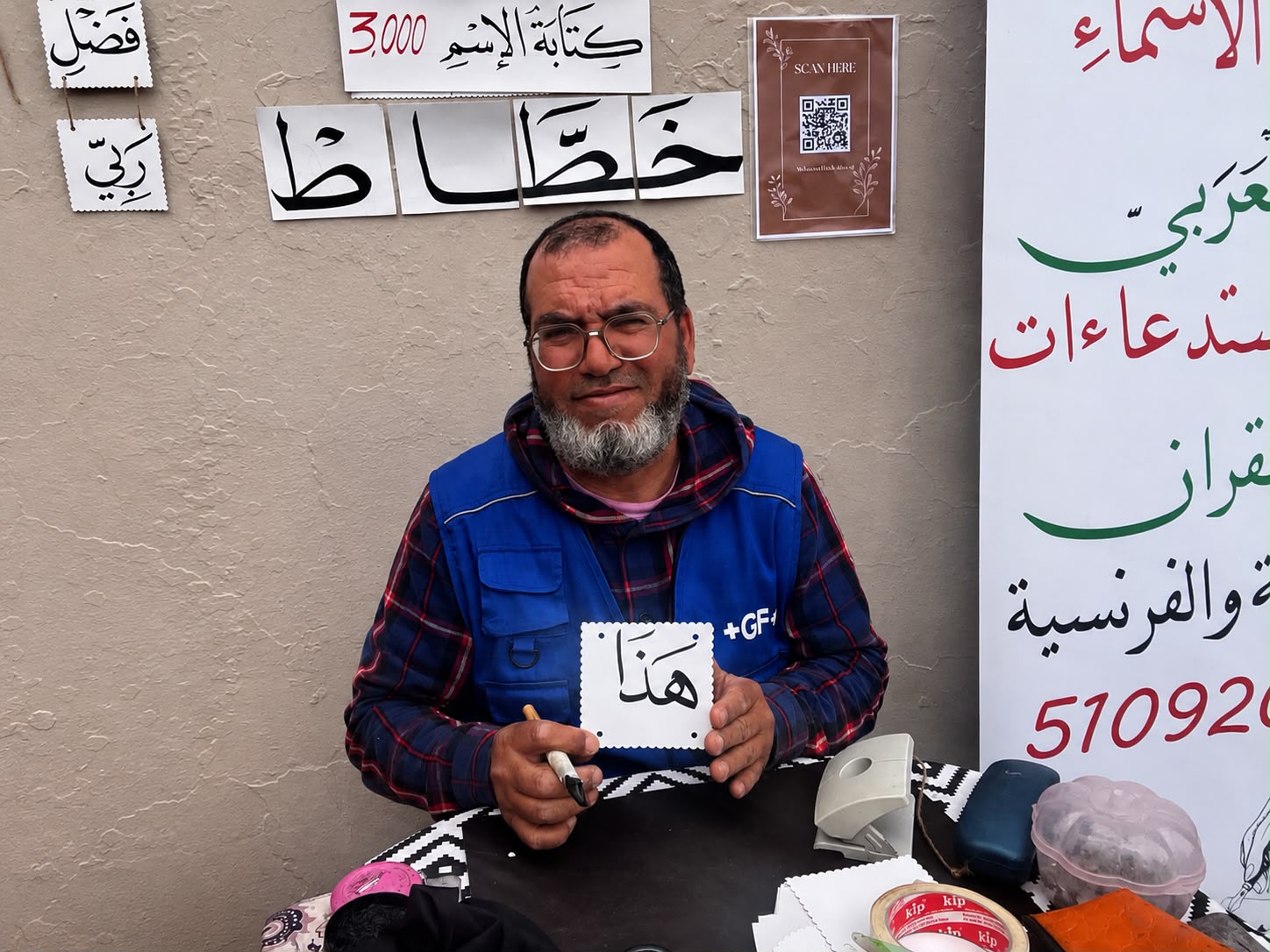
Mohamed
Al Khatat
Turning Arabic calligraphy, personalised art and creative learning into a sustainable enterprise.
Read Mohamed’s story
Impact Sector: Arts for Social Change · Cultural Preservation · Circular Economy · Youth Education
For Mohamed, Arabic calligraphy is more than an art form.
It is a language — one that can carry culture, values and ideas from one generation to another.
But preserving calligraphy, for him, does not mean simply reproducing the past. Mohamed wants to make it relevant to the questions young Tunisians are facing today.
Mohamed sees art as a creative way to educate, raise awareness and open conversations around social and environmental issues. Through words and visual storytelling, calligraphy can speak about solidarity, respect, citizenship, inclusion or our responsibility towards the environment.
And while thinking about the messages art can carry, Mohamed started asking another very practical question:
Why should creating something new always require using something new?
These two questions — what message does the artwork carry, and what is it made from? — are at the heart of Al Khatat.
The solution: art with a message, made responsibly
Through Al Khatat, Mohamed creates Arabic calligraphy, personalised pieces and contemporary designs that combine cultural heritage with social and environmental purpose.
The first dimension is art for awareness and education.
Rather than communicating social issues through another poster or lecture, Mohamed uses calligraphy to turn words and values into something people want to look at, discuss and remember.
He is particularly interested in working with young people — teaching them the techniques and history of Arabic calligraphy while encouraging them to use art to express their own ideas about their communities and the issues that matter to them.
The second dimension is circular creation.
Mohamed works with second-hand, recovered and recycled materials, transforming objects and surfaces that might otherwise be discarded into new artistic pieces.
An artwork encouraging environmental responsibility becomes more powerful when the material carrying that message has itself been given a second life.
Al Khatat therefore brings together two forms of preservation: preserving cultural heritage and preserving resources.
Turning art with purpose into a social business
Mohamed already had the artistic skill and a clear sense of purpose when he started working with MENA-can.
The challenge is making that purpose economically sustainable.
Our work together is focused on developing a business model that can generate income without reducing Al Khatat to simply selling decorative calligraphy.
Commissioned artworks and personalised products are one part of the model. But we are also exploring recycled product collections, workshops for young people, educational activities, and collaborations with schools, cultural spaces, businesses and civil society organisations that want to communicate social or environmental messages creatively.
We are working with Mohamed on customer segments, pricing, communication and partnerships.
This is the business model Al Khatat is beginning to build:
art that creates value because it has a purpose — not despite it.
Giving a second life to materials, heritage and messages
Mohamed’s longer-term ambition is to grow Al Khatat beyond his individual artistic practice.
He wants young people to learn calligraphy not only as a traditional craft, but as a contemporary language through which they can express ideas, question behaviours and promote positive values.
And he wants circularity to become part of that learning: collect something discarded, rethink its value, transform it through art, and use the finished piece to communicate a message.
The next challenge for Mohamed — and the work we are doing together — is to build the business model that allows that impact to sustain itself.
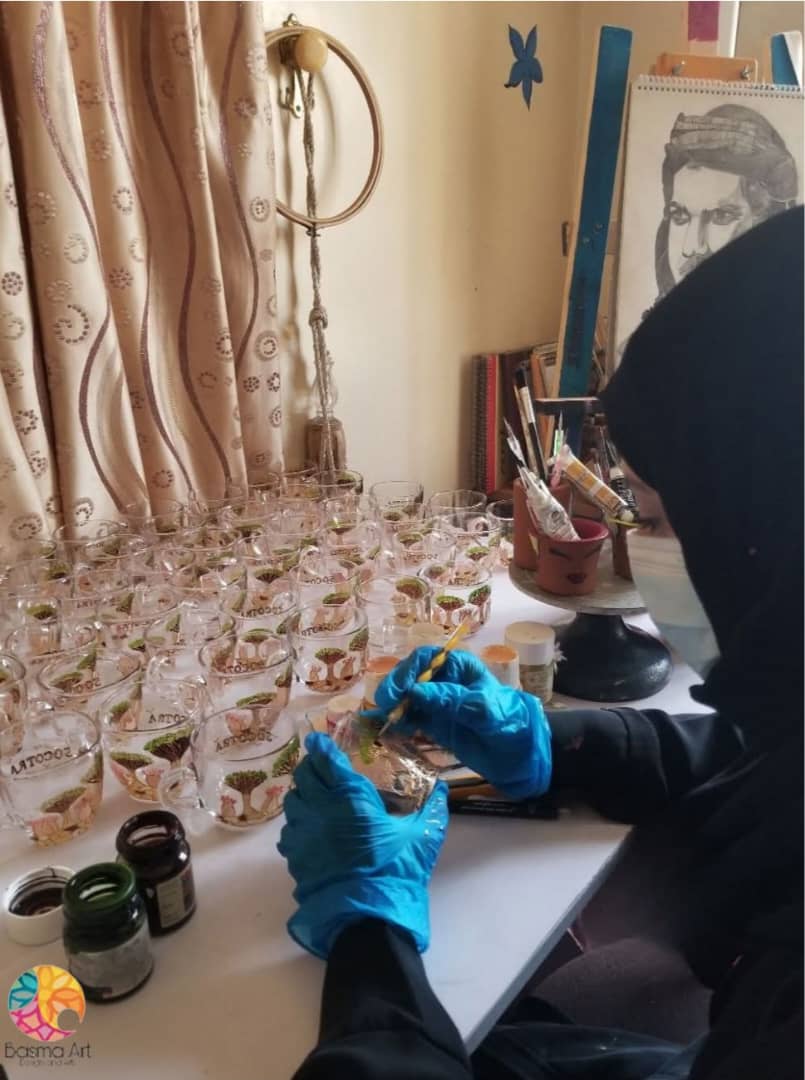
Basma
Basma Art
Creating hand-painted glassware and personalised art products from her home studio.
Read Basma’s story
Impact Sector: Creative Economy · Inclusive Employment · Arts for Social Change · Cultural Preservation
For Basma, art came before entrepreneurship.
Communication and social interaction were not always easy for her. Art became another language — a way to express what she could not always easily communicate in words.
Over time, what began as something deeply personal became a skill, then a passion, and eventually something Basma began to imagine as a profession.
But turning creativity into a livelihood in Yemen is far from straightforward.
Years of conflict and economic hardship have weakened purchasing power and made the market for handmade and artistic products particularly difficult. Materials can be expensive or hard to find. And for women artists, there is another barrier: the perception that creativity can be a hobby, but not necessarily serious work or a viable business.
In a country where communities have lived through years of conflict and profound social change, art can do more than decorate a wall or an object. It can communicate. It can preserve memory. It can make difficult subjects visible.
What if creativity could generate an income — while also becoming a way to talk about the issues affecting her community?
The solution: art that carries a message
Basma created Basma Art, a creative business producing handcrafted artwork, glass painting and creative design.
Her work draws on Yemeni culture, identity and visual heritage, while increasingly communicating around issues she cares about — women’s empowerment, environmental responsibility, inclusion and community values.
She wants to demonstrate that artistic talent can become productive work, particularly for women and young people whose creativity is often undervalued.
Artists can earn from their talent — and they can be changemakers too.
From artist to social entrepreneur
When Basma joined MENA-can, she already knew how to create. What she was looking for was a way to turn that creativity into a viable business without losing the meaning behind it.
Our work together has focused on understanding customers, pricing and costs, communicating the value of her work, and developing a business model that can take Basma Art beyond individual pieces and occasional sales.
How can social impact become part of the business model itself?
Basma’s next ambition is to create her own studio — not simply a workshop where she can produce and sell her work, but a space where art, learning and community come together.
She imagines women learning creative skills there, young artists experimenting and finding their voices, workshops using art to explore environmental or social issues, and collections celebrating Yemen’s cultural heritage.
Basma Art can grow from a creative studio into a platform for “art for good” in Yemen — bringing together artists who want to use their talent not only to earn a livelihood, but also to contribute to social change in their communities.
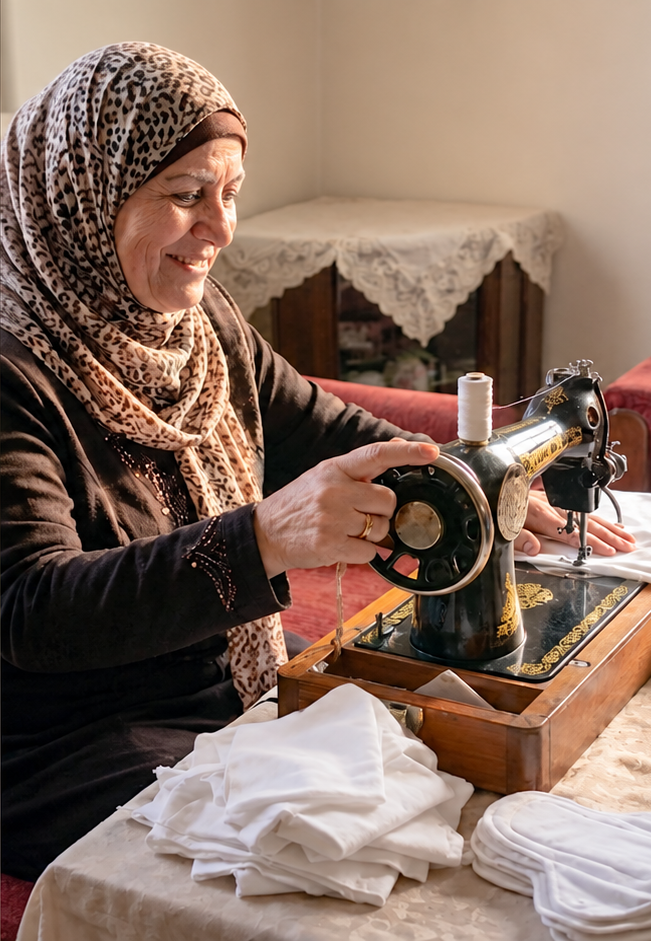
Yamamah
Hilalah
Developing reusable menstrual products alongside education and safe spaces around women’s health.
Read Hilalah’s story
Impact Sector: Women’s Health · Menstrual Dignity · Circular & Sustainable Products · Women’s Empowerment
The challenge: a basic need we rarely talk about
For Hilalah, women’s health begins with being able to talk about it.
Years of conflict and economic hardship in Syria have made many everyday essentials more expensive and less accessible. For women and girls, that includes something they need every month: affordable quality menstrual products.
But access to products is only one part of the problem.
Menstruation and women’s health can still be surrounded by embarrassment, misinformation and silence. Girls and women may have questions about their bodies and menstrual health but few places where they feel comfortable asking them.
At the same time, conventional disposable sanitary products create another challenge: they are purchased month after month, generate considerable waste and represent a recurring cost for women and families.
Hilalah began connecting these problems.
Could a product that women need every month become the starting point for something bigger — better information, less waste — and help create a space where women can talk about their health without shame?
The solution: a healthier, reusable alternative
Through Hilalah, Hilalah is developing sustainable, reusable menstrual pads designed to offer women a safer, more affordable and environmentally responsible alternative to conventional disposable products.
A product that can be washed and reused has the potential to reduce repeated spending on disposable pads while generating less waste over time.
But Hilalah does not see the pad as the entire solution.
The product opens the door to a conversation.
Hilalah combines access to sustainable menstrual products with education around menstrual and women’s health, helping women and girls better understand their bodies, challenge misinformation and make more informed choices about their health.
Creating safe spaces around women’s health
Hilalah wants Hilalah to create something that cannot be packaged and sold: a safe space.
A place where women can meet, ask questions they may not feel comfortable asking elsewhere, access reliable information and talk about health without judgement.
Through Hilalah’s community activities, including its work in Qudsaya, Hilalah has already organised dozens of sessions bringing women together around wellbeing, health and community issues.
Her ambition now is to connect that community work more closely with Hilalah’s social-enterprise model.
A woman may first encounter Hilalah through a menstrual-health session. She can learn about reusable products, understand how to use and care for them safely, and become more confident talking about her health.
Over time, some women could become more involved themselves — sharing knowledge with others, supporting distribution or potentially participating in production.
From a women’s initiative to a sustainable social business
When Hilalah started working with MENA-can, she already had the community trust and social purpose behind Hilalah.
The challenge we are working on together is:
How can that impact become sustainable without depending entirely on grants?
Our work has focused on strengthening the social-enterprise model around Hilalah — understanding production costs, customers and pricing; exploring how reusable pads can generate revenue while remaining accessible; and thinking about distribution and partnerships that can allow the products and health education to reach more women.
If the product is too expensive, it excludes precisely the women Hilalah wants to reach. If it is permanently given away, the initiative risks becoming dependent on external funding.
The business model has to protect both accessibility and sustainability.
That can mean combining direct sales with partnerships, institutional buyers or subsidised access for women with fewer resources. It can also mean developing opportunities for women to participate in production and distribution, allowing part of the value created by Hilalah to return directly to women themselves.
Hilalah’s ambition for Hilalah is therefore larger than selling reusable pads.
She wants to build an ecosystem around women’s health — where a sustainable product becomes an entry point to education, conversation, community and greater agency. Because sometimes social innovation begins with taking something society has learned not to talk about — and making it visible enough to solve.